
[For further developments, see: Censorship by Meta? Update on Pringle v Nervo, 17 May 2026.]
This story by the Good Law Project on 19 March – Liv Nervo: Court calls Pringle’s ‘shameful’ conduct ‘abuse’– is about a mother who wanted to publicise her family court case but then found that the decision that allowed the media into court to listen to the evidence and arguments, at the same time stopped anyone speaking up about what had happened to her.
The Good Law Project had on 31 January published this about the case – Liv Nervo speaks out against the man who tricked her into pregnancy. The unusual facts meant that we immediately recognised the case as one we’d written about back in our May 2025 Roundup. We therefore caught up with the Court of Appeal video of the hearing from 29 January. However, we weren’t entirely sure at that stage how much could be said about linking the judgments together.
The recently published Court of Appeal judgment, Matthew James Pringle v Olivia Margaret Nervo [2026] EWCA Civ 266 now identifies the parents in dispute as Liv Nervo, who is internationally known with her sister as Nervo DJs and Matthew Pringle, a wealthy businessman (who apparently acquired that wealth through marketing honey).
Ms Nervo and Mr Pringle have been interlocked in financial and contact negotiations and family court proceedings since their child was born in 2019. Ms Nervo discovered late in her pregnancy that Mr Pringle already had a family in New Zealand and she ended her relationship with him before the child was born.
Her lawyers raised interesting questions about ‘reproductive coercion’ – had this mother become pregnant with Mr Pringle only because he had induced her into believing they were setting up a family, while concealing he already had a family?
The transparency issues
There were disagreements between the parents about the amount of contact the father would have with the child and about financial support for her. The mother believed there were wider public issues at stake and a Transparency Order (TO) had been issued to allow the media to report. Unusually, the TO didn’t prohibit identification of the child until she reached 18, but would expire at the end of proceedings.
The anonymisation restriction in Children Act 1989 cases usually ends when the case finishes (section 97(2)). However under a standard TO, anonymity is imposed until the child turns 18. So if Ms Nervo and the media hadn’t sought and obtained a TO, Mr Pringle might not have been alerted to possible future publicity and they could have publicised some of the case after the final hearing. They probably would have tried hard to ensure that the child wasn’t identified, but the problem was that there was a risk she could be identified via the parents being named. Although the public could read a lot about Ms Nervo’s complaints in the judgments, it was too risky for anyone to publish this as a ‘story’ with names and photos, without potentially breaching the TO and being in contempt.
It should be noted that the Good Law Project and the parents have continually kept the child’s name and exact age confidential.
The court decisions
The first published judgment appears to be RC v FP [2025] EWFC 123 from a hearing in February 2025.The father applied to extend the TO until the child turns 18, in accordance with more common practice. Nicholas Allen KC heard from the BBC and from freelance journalist Lucia Osbourne Crowley, who supported the mother’s arguments against this. After lengthy consideration of the arguments and the law, he conducted the required balancing exercise and concluded that more weight should be given to the child’s privacy and the TO should be extended. This judgment was published in May 2025.
In a separate judgment, RC v FP (No. 2: Costs) [2025] EWFC 124, Nicholas Allen KC made a costs order that the father pay the mother £385,587, which was 75% of the costs of £514,115.97 she had incurred. His own costs were at a similar level. It’s unusual to make a parent pay the other parent’s costs in respect of proceedings involving a child unless a party’s behaviour has been ‘reprehensible or unreasonable’. The reasons put forward by the judge for this high award were: the father’s motivation in making the court applications; his late withdrawal of applications for parental responsibility and a child arrangements order; his failure to attend hearings in September 2024 and February 2025; and his late concession to making s 91(14) Children Act 1989 order and late application to file a witness statement.
In January 2026, the Court of Appeal, in Pringle v Nervo, allowed the father’s appeal against the costs order. The court said the judge had not applied the correct factors to meet the ‘reprehensible or unreasonable’ test and had not taken sufficient account of the mother’s behaviour. There’s quite a lot of comment in the judgments about the mother’s change of legal team and her taking a far more adversarial approach part way through the proceedings which increased legal costs considerably. Apart from the father agreeing to pay the costs of her application for a declaration of parentage, there would be no costs awarded against him.
How the transparency order ceased to have effect
As soon as that Court of Appeal hearing began, Lady Justice King told everyone present (and watching online) that the TO made in the Family Court no longer applied because this appeal was being held in open court. The parties would be named in the usual way although the child would not be named and she wasn’t directly involved. Apparently the parties’ lawyers had already prepared some redacted documents for the media – so it seemed they weren’t sure what could be released – but King LJ said that precaution hadn’t been necessary.
Mr Pringle’s decision to appeal therefore succeeded in cutting down his total legal bill, some of which presumably had been run up by Ms Nervo’s arguing against his efforts at privacy. Paradoxically, because of his appeal, it’s now possible to read Ms Nervo’s side of the story on the Good Law Project site and to find the relevant judgments.
The story has been published in the Law Gazette – DJ’s ex-partner escapes costs order in bitter family proceedings
And the New Zealand Herald – The DJ and the honey tycoon their baby and his secret family (paywall)
Last word goes to Lord Justice Males at para 72 of the Court of Appeal judgment:
Finally, and speaking as one who is not a specialist in family law, I confess that I am somewhat bemused by the concept of a Transparency Order whose sole purpose is to ensure privacy. I do not doubt that such orders are appropriately made in many cases, and there is no issue before us as to the order which was made in this case. But it seems to me rather odd that such orders do precisely the opposite of what it says on the tin.
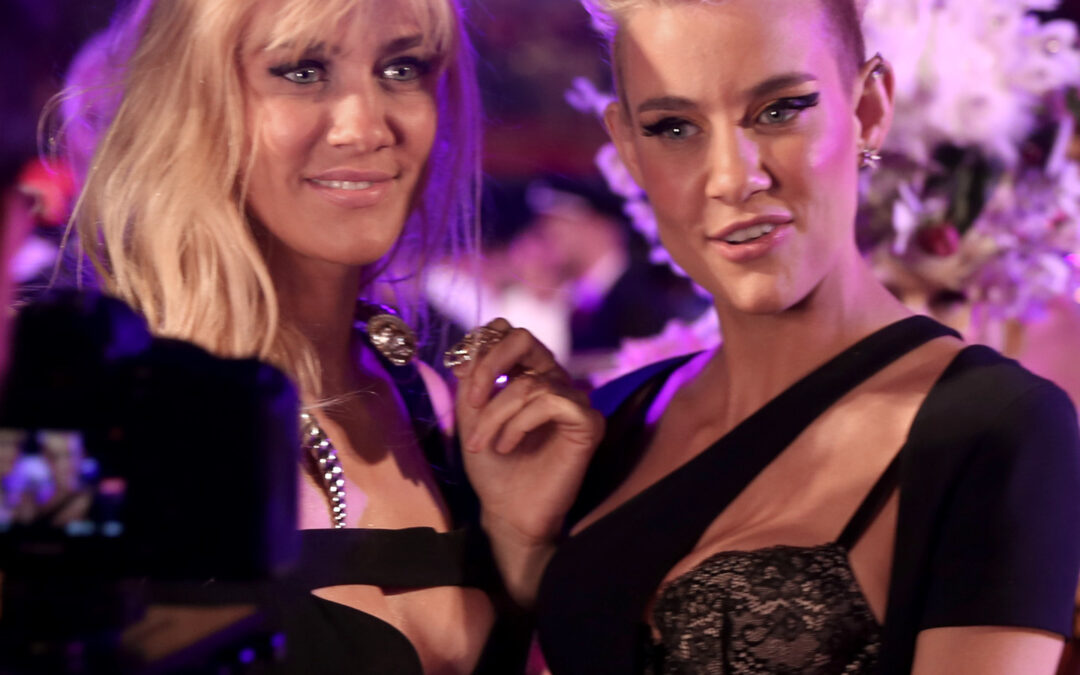
Image: Nervo DJs at Life Ball 2014 Red Carpet – Manfred Werner/Tsui – CC by-sa 3.0, via Wikimedia Commons
We have a small favour to ask!
TEN YEARS A CHARITY
The Transparency Project is a registered charity in England and Wales run by volunteers who mostly also have full-time jobs. Although we’ve now been going for a decade, we’re always working to secure extra funding so that we can keep making family justice clearer for all who use the court and work in it.
We can’t do what we do without help from you!
We’d be really grateful if you were able to help us by making a small one-off (or regular!) donation through our Just Giving page