
This headline appeared in The Observer on 3 May. The sub headline says:
A member of the armed forces who terrorised his wife has been allowed unsupervised access to their daughter – in a case that British military authorities tried to keep out of the public eye.
The article, written by Louise Tickle, is available to Observer subscribers only, but the High Court judgment can be read on The National Archives – Re CX (A child)(Reporting restrictions order: National security) [2026] EWHC 994 (Fam).
Louise was applying to be able to write about a case involving a family court order in 2023 that a violent man be allowed unsupervised contact with his child, despite a district judge having made findings of severe abuse by him of the child’s mother. This turned into a more unusual and drawn-out application when the father’s employers, the Ministry of Defence (MoD), got involved.
The judgment about reporting
The hearings took place between December 2025 and February 2026. Some of the hearings were ‘CLOSED’ because of national security issues, which meant that the judge had agreed with the MoD that some of the evidence would have to be withheld from other parties and their lawyers. In this type of situation, Closed Material Procedures allow a ‘special advocate’ to be appointed, who represents the interests of parties who aren’t present in court. The context is explained in this Parliamentary report.
The judge, Mr Justice Garrido has published only the judgment from the OPEN hearing which includes the ‘gist’ of some parts of the CLOSED hearings. These are some points from that judgment:
Louise had applied in January 2025 to be able to write about the case along the lines of a standard Transparency Order but also to be able to name the father because there was a public interest in knowing he was a member of the armed forces. She also sought access to evidential documents that had been filed in the family court case. The father applied for a reporting restriction order (RRO) to protect his identity. He included a letter from the MoD that ‘sought to specify the national security, operational and personal risks of reporting the original proceedings in a way that identified the father, having regard to his membership of ‘a unit of the armed forces which is protected in the interests of national security’.
In July, the judge agreed to requests for a special advocate to represent the interests of Louise, the mother, and the child; although the father didn’t ask for a special advocate because his position was covered by the MoD, who were already taking part in the closed procedure. In the open (but still private) hearings, Louise and the parents were each represented by barristers acting pro bono; the child’s lawyers were funded by legal aid. The MoD also had publicly funded barristers.
A series of open and closed hearings followed. These are partly summarised by the judge but of course the information is necessarily limited because much of it was in the closed hearings and only seen by the judge, the MoD lawyer, and the special advocate. We can’t see from the judgment why the MoD thought naming the father was a threat to national security, but we are aware of the Government’s ‘neither confirm nor deny’ policy regarding the identity of members of the special forces or covert operatives. There has been controversy about the use and reliance on this policy in recent years, for example in the case of Beth, referred to in the judgment AG v BBC, R (‘Beth’) v IPT [2025] EWHC 1669 (KB). In the Beth case, although the Government sought to rely on the policy, it was pointed out that they had already given the game away by telling the BBC that a particular individual was a MI5 covert human intelligence source. In CX, this happened through the letter produced in support of the father’s application for restrictions on publication of his name, which the special advocate ‘persuasively’ argued was an ‘avowal’ i.e. an acknowledgment that he was a Special Forces operative.
By the date of the open hearing in February, agreement had been reached about what Louise would be able to write. She could publish the assertion that the father was and remained a serving member of the Special Forces, although not his name.
As Louise writes:
The special advocate’s arguments were so convincing that the MoD finally caved, and on 27 January, I received an email from a government solicitor saying the MoD would “no longer pursue its application for a reporting restriction order”.
The judge said:
There is no doubt in my mind that the majority position is the correct one. There is a significant public interest in the family court’s approach to the determination of allegations of domestic abuse and the impact of any subsequent findings on the future arrangements for children to have a relationship with a perpetrator parent. I proceed on the basis that Ms Tickle’s purpose in reporting this case is to enable public scrutiny and further public understanding of the decisions taken in that context in this particular case. That places this application squarely within the open justice principle, and is not undermined by the additional impact on the case of the assertion of the father’s membership of UKSF, whatever that may be. [65]
The decisions in the lower court about contact
The identity of the original judges who made these decisions and the location of the family court aren’t known, because these are additional items not to be disclosed under the RRO.
According to Garrido J:
In an exemplary judgment delivered on 20 January 2022, the judge decided that the mother had indeed suffered terrible abuse perpetrated by the father. An extract from that judgment reads as follows:
[96] … In my view, it was a relationship characterised by extreme emotional and psychological abuse of the mother over many years. There were patterns of behaviour by the father that were deliberately intended to worsen her anxiety and intimidate her and make her feel subordinate. At numerous points in 2017, 2018 and 2019 welfare [the military welfare service] were so concerned that they wanted to disclose to the father’s employer, but they did not have the mother’s consent to do so. Instead, they put in place safety plans and referred her to other support services. [5]
Descriptions of the abuse the mother suffered are featured in Louise’s article. This includes an incident when the father grabbed the mother (when she was heavily pregnant) by the throat and kicked her in the stomach.
After the mother left with the child, and the father applied to court, he was initially allowed supervised contact. Then, after he completed a course on a domestic abuse perpetrators’ programme, this was varied by the court to progress to weekly unsupervised contact in 2023. This decision didn’t accord with the recommendations of the Cafcass officer, who made a referral to child protection services.
The Observer quotes the mother’s solicitor:
“It was the worst domestic abuse case I’d seen in my whole career, and one of the most dangerous orders I’d ever encountered, given the seriousness of the abuse and the impact on the mother.”
Clearly, the decisions about allowing contact were disturbing and that was a story in the public interest in itself, but as the Observer article says:
the MoD tried to hide from the public that a special forces serviceman – whose abuse was known at a senior level within the military – was able to continue his employment with impunity, and then enjoy the active, and legally expensive, protection of the state when a journalist sought to expose it.
The Observer also features claims by the military that action is being taken to curb intimate partner violence:
Gen Sir Roly Walker, head of the UK’s armed forces, commanded senior military leaders to stamp out abuse wherever they saw it, after the abuse-related suicide of a young servicewoman.
It is believed that the father in this case still works in the Special Forces and has been promoted. General Walker was approached for interview but this was refused.
Louise Tickle is a member of The Transparency Project. Lucy Reed KC and Chris Barnes KC (who acted pro bono for Louise and for the mother respectively) are also members of TP.
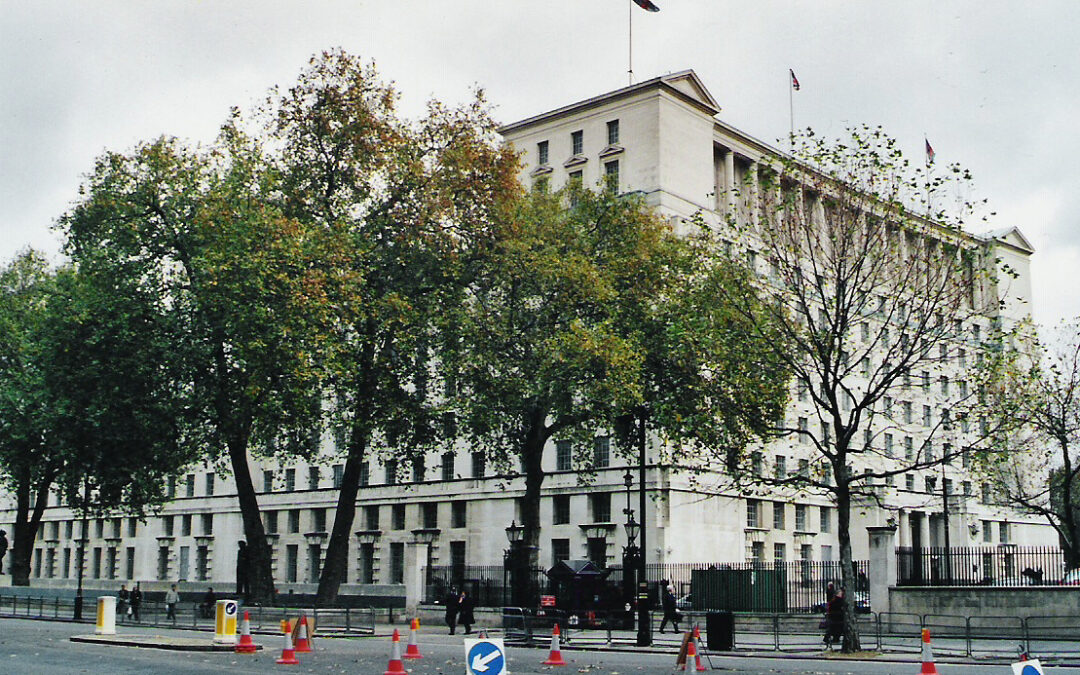
Image: Ministry of Defence, Whitehall, photo Chris Nyborg, Wikimedia Commons
We have a small favour to ask!
TEN YEARS A CHARITY
The Transparency Project is a registered charity in England and Wales run by volunteers who mostly also have full-time jobs. Although we’ve now been going for a decade, we’re always working to secure extra funding so that we can keep making family justice clearer for all who use the court and work in it.
We can’t do what we do without help from you!
We’d be really grateful if you were able to help us by making a small one-off (or regular!) donation through our Just Giving page