
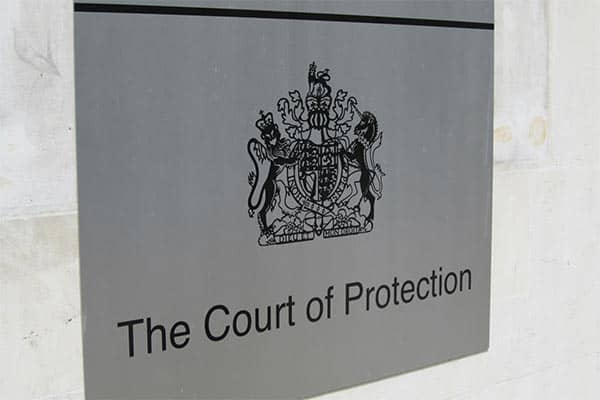
Earlier this week, the Court of Appeal heard an argument that the Open Justice Principle does not apply to the Court of Protection (CoP) and that an ‘urban myth’ had wrongly grown that any attempt to restrict public access to CoP proceedings was ‘a derogation from open justice’.
We were concerned about the implications for family courts, because traditionally, adults who lacked capacity and children were classed together as groups needing special privacy protection in court proceedings. Over the past ten years or so, there have been big – although different – shifts. In the CoP, most hearings have been held in public since 2016. In the family courts, open reporting and some other aspects of the President’s Transparency Review have been implemented, although hearings are still held in private.
This hearing was in the case of Re Gardner, an appeal against an order by Mr Justice Poole in July 2025 that four position statements in a CoP case be sent to an observer, Professor Celia Kitzinger of the Open Justice Court of Protection Project. The appeal was brought by the late Mr Gardner’s mother and supported by the Official Solicitor in her own right. Professor Kitzinger was joined as an intervener. You can watch the video of the hearing here. There’s a very helpful summary and comment by Daniel Cloake here – ‘Open Justice is not Open Sesame’
It quickly became clear that the Court of Appeal was not going to consider children’s privacy alongside CoP cases. There were however quite a few references to how open justice issues are currently dealt with in family courts, with regard to transparency orders and access to documents. A crucial difference is that the CoP is ‘open to all comers’ while children cases can only be attended for reporting purposes by accredited journalists and legal bloggers.
Operating open justice in the CoP
Lord Justice Peter Jackson disagreed that the OJP didn’t apply to certain courts. He said the OJP applies everywhere, to the extent that it’s appropriate. Time wasn’t spent arguing this perhaps philosophical point. The barrister for the late Mr Gardner’s mother went on to explain more generally the difficulties faced in trying to ensure open justice in the CoP by making ‘unwieldy’ and ‘clunky’ orders. The transparency order (TO) template in the CoP is all about anonymising the person subject to the application. It doesn’t help with anything else.
The lawyers talked about the burden of preparing an anonymised TO in every CoP case, because it is possible a member of the public might turn up, although they rarely do. Might they have to produce redacted statements too?
Unlike a TO in the family court, there is nothing in a CoP TO about providing documents to observers. The practice had grown of providing them if they helped an observer to understand the proceedings. Poole J had set out some suggested guidance on this when he made the order that the family and OS were objecting to. Everyone now wanted some workable guidance from the CoP Procedure Rule Committee but this would probably take some time. It may be that the Court of Appeal can assist in the interim, but a rule change will require a consultation process.
What next?
The hearing wasn’t all about the inadequacy of the court rules. Submissions were also made about the distress suffered by the family when Mr Gardner was on life support and when he died, and that continues for some of them regarding the documents they didn’t want shared. Professor Kitzinger has given an undertaking not to publish from them pending the outcome of the appeal. The judgment should be published in the next few weeks.
Although the comparisons made with family court TOs made it sound as though getting copies of documents that journalists and bloggers need is a walk in the park, it isn’t. It’s often difficult and sometimes impossible, even those the TO says we can have automatically.
It is hoped however that the Court of Appeal can come up with something that will help parties, lawyers and observers in the CoP more easily weave the OJP into procedures without adding further complexity.