
This week, I attended a short hearing at Cardiff Family Court about a local authority wanting to move a child under an interim care order to a school nearer where he currently lives. His mother didn’t agree, and she applied to court to object. With only a few days until start of term, HHJ Scannell held a hearing at short notice. The child is of primary school age.
Local authority reasons for planning the change of school
The child is living with a family member under an interim care order (ICO), and has to travel by taxi to and from his school each day. He has been doing so for about a year. The journey is 45 minutes each way, and he travels by himself. The local authority think it would be better for him to attend a school nearer home and avoid that long daily journey. Another school had been identified that could take him. The professionals were all agreed on the move, including an independent reviewing officer.
The lawyer for the Cafcass Cymru guardian said she supported the local authority.
Mother’s reasons for objecting
The child’s mother wants him to stay in the school he is used to, where he has good relationships with teachers and other children. She says moving him would be unsettling. Secondly, if the final outcome of the care proceedings is that he doesn’t stay in that placement, he will probably have to move yet again. The mother’s lawyer referred to conversations the head teacher had with the child in early summer, in which he had indicated he was happy at school and didn’t want to move. The family member who is caring for him has said that she didn’t want to pre-empt the final decision; she just wanted to know where he was going to go to school. There is an issues resolution hearing scheduled for early October, so the mother suggested that a decision about school could be made then and, if there was a move, it could be at half term.
The judge’s views
The judge asked what sort of order she was being asked to make because she has no power over the local authority exercising its parental responsibility (PR) for the education of a child under an ICO. She pointed out that she had been provided with no evidence from anybody. The discussions with the child at school were not ‘a piece of work done with him to ascertain his wishes and feelings’. The mother’s lawyer replied that they trusted the local authority would listen to the judge’s views.
The local authority lawyer said that she understood that it had been raised at an interim hearing in July that they were likely to use their PR to move the child to a different school, but the judge asked what evidence they now had, the day of this hearing, about his welfare. She asked about the weekly schedule, and it transpired he was in an after-school club and the carer wasn’t home until 5.30 p.m. Nevertheless, the judge said the 45 minutes sounded like ‘an awful journey’. The local authority lawyer pointed out that matters might not be resolved in October, and we’d be getting into darker evenings before a final hearing.
Welsh language education
The judge then asked about the Welsh language issue because the current school is a Welsh medium school and the new school selected is an English medium school. (In Wales, children have the option of being taught in either English or Welsh; about 20% of children go to Welsh speaking schools.) The mother had chosen a Welsh medium school for him and she wanted this to continue. The local authority said that there were some Welsh medium schools near the carer’s home and that they could check these for a place later in the week. However, they believed that the child would do better in an English medium school, which is why they’d gone down that route. Apparently, he was behind academically.
The judge wasn’t happy that the local authority hadn’t investigated how well the child was engaging with Welsh education if they were just relying on the mother’s wishes as the basis for him attending Welsh schools.
Conclusions
The judge asked the lawyers for the local authority and for the child why it was crucial for the child to be moved at this juncture. She said that, under an ICO, she would have expected significantly more work to have been done by the local authority on the best educational plans for the child, before moving him.
The child had been undertaking the travel arrangements for a year and no one had presented her with any evidence that he was suffering from this.
However, the judge told the local authority that she was not seeking to tie their hands and that she had no power to tell them that they shouldn’t move the child. She made ‘no order’.
I hope to attend future hearings when I’m assuming I will hear that the school move didn’t happen at the beginning of September. I’m not sure at this stage exactly when the family were told that the move was to go ahead at the beginning of the autumn term but they hadn’t seemed to be aware of it as a definite plan. The decision seemed to have been made mainly in the belief that the child wasn’t coping with learning in Welsh and an assumption that he didn’t benefit from the long travel. No mention was made of how much the taxi travel (about 14 miles each way) is costing the local authority, so I don’t know if this was a factor.
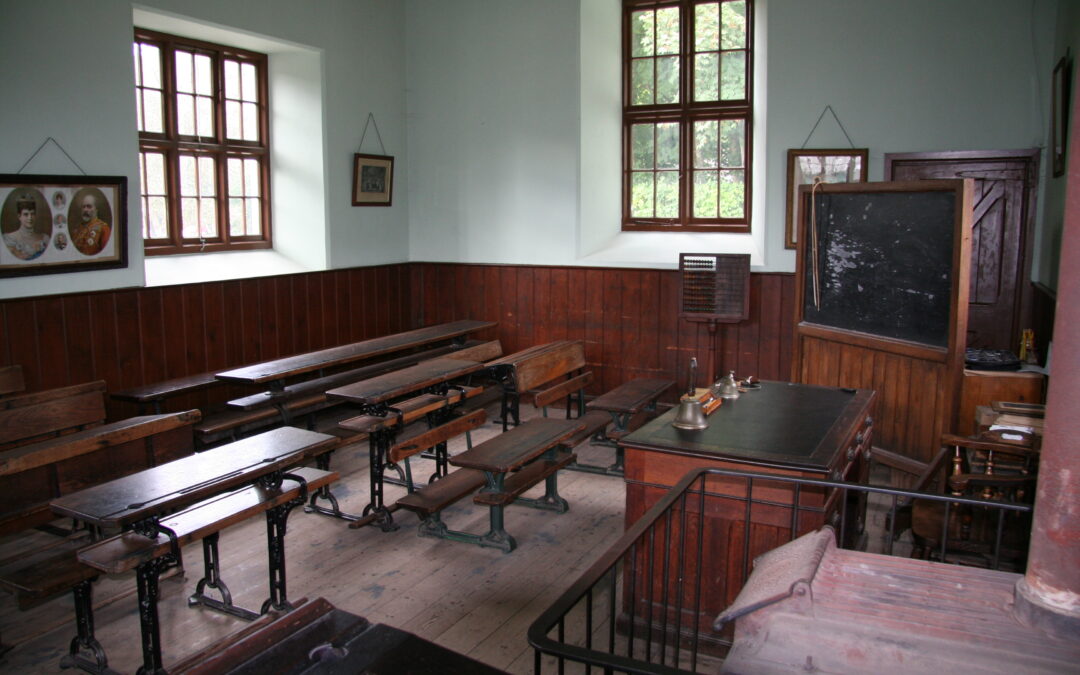
Image: school room at the Welsh History Museum, St Fagans. Thanks Peter Reed at Flickr
We have a small favour to ask!
TEN YEARS A CHARITY
The Transparency Project is a registered charity in England and Wales run by volunteers who mostly also have full-time jobs. Although we’ve now been going for a decade, we’re always working to secure extra funding so that we can keep making family justice clearer for all who use the court and work in it.
We can’t do what we do without help from you!
We’d be really grateful if you were able to help us by making a small one-off (or regular!) donation through our Just Giving page